Typical Applications
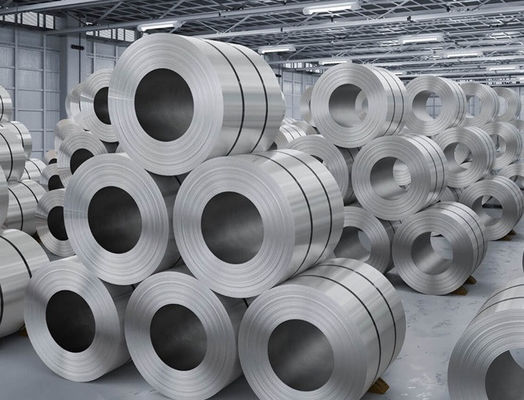
The 304 1/2H 3/4H H Stainless Steel Coil is widely used across industries requiring durable, corrosion-resistant, and high-strength materials. Thanks to its balanced mechanical performance and excellent processing capability, this stainless steel coil serves diverse manufacturing applications.
Automotive Industry
Used for producing brackets, trim components, exhaust system parts, and structural components that must resist corrosion and maintain strength under mechanical stress.
Electronics Manufacturing
Frequently used for device housings, precision components, connectors, and structural frames due to durability and dimensional stability.
Industrial Machinery
Processed into various metal components such as clips, fasteners, support brackets, and equipment housings.
Construction & Architectural
Widely used in elevator panels, decorative wall panels, and structural elements requiring both durability and aesthetic appearance.
Product Description
The 304 1/2H 3/4H H Stainless Steel Coil is produced from high-quality AISI 304 stainless steel, one of the most widely used stainless steel grades in modern manufacturing. This material contains chromium and nickel elements, providing outstanding corrosion and oxidation resistance.
Manufactured using advanced cold rolling processes, the stainless steel coil offers uniform thickness, smooth surface finish, and excellent mechanical performance. These characteristics make it ideal for precision manufacturing processes including stamping, forming, bending, laser cutting, and welding.
Available Temper Conditions
- 1/2 Hard stainless steel coil provides moderate strength while maintaining flexibility, making it suitable for forming operations.
- 3/4 Hard stainless steel coil offers higher tensile strength and improved rigidity, commonly used for stamping parts.
- Full Hard stainless steel coil provides maximum hardness and durability, ideal for structural components and high-strength applications.
Product Specifications
| Product Name | 304 1/2H 3/4H H Stainless Steel Coil |
| Material Grade | AISI 304 |
| Temper Options | 1/2 Hard / 3/4 Hard / Full Hard |
| Thickness | 0.2 mm - 3.0 mm |
| Width | 20 mm - 1500 mm |
| Surface Finish | 2B / BA / No.4 / HL |
| Production Process | Cold Rolled |
| Corrosion Resistance | Excellent |
| Standard | ASTM / JIS / DIN |
Performance Advantages
- Better Corrosion Resistance Than Carbon Steel - Contains chromium that forms a protective oxide layer to prevent corrosion.
- Higher Durability Than Aluminum - Offers superior mechanical strength and better wear resistance.
- More Stable Performance in Industrial Environments - Maintains structural performance under temperature changes, humidity, and mechanical stress.
- Superior Surface Quality - Cold rolling technology provides smooth surfaces suitable for industrial and decorative applications.
- Long Service Life - Combination of corrosion resistance and high strength ensures extended operational life cycles.
Manufacturing Benefits
Manufacturers prefer 304 stainless steel coil for its excellent processing performance. The material can be easily cut, bent, stamped, and welded using common industrial techniques.
The availability of multiple hardness conditions allows engineers to select optimal material properties for different production processes, improving efficiency while maintaining product quality.
Frequently Asked Questions
What does 304 mean in stainless steel?
304 refers to the chemical composition of the stainless steel alloy, which includes chromium and nickel that provide corrosion resistance.
What is the difference between coil and strip stainless steel?
A coil is a large rolled form of stainless steel, while strips are narrower materials cut from coils.
Can stainless steel coil be polished?
Yes, stainless steel coils can be polished or brushed depending on the required surface finish.
Is stainless steel suitable for precision stamping?
Yes, 304 stainless steel coil is widely used in precision stamping industries.
What thickness options are available?
Common thickness ranges from 0.2 mm to 3.0 mm depending on industrial requirements.


 Your message must be between 20-3,000 characters!
 English